


Understanding Currents in East Bali: Why They Actually Make Diving Better
If you’ve ever researched diving in Candidasa, you’ve probably seen one word come up again and again:
Currents.
And for some divers, that word feels intimidating.
But here’s the truth: currents are one of the biggest reasons East Bali diving is so good.
Let’s break it down.
Why Currents Matter
Currents aren’t random. They’re part of a massive ocean system moving water between the Pacific and Indian Oceans. It is called the Indonesian Throughflow (ITF).
That moving water brings nutrients.
Nutrients feed plankton.
Plankton feeds reef ecosystems.
Reef ecosystems attract bigger fish.
So when divers say, “Candidasa has strong currents,” what they’re really saying is: this place has life.

What Does an Underwater Current Actually Feel Like?
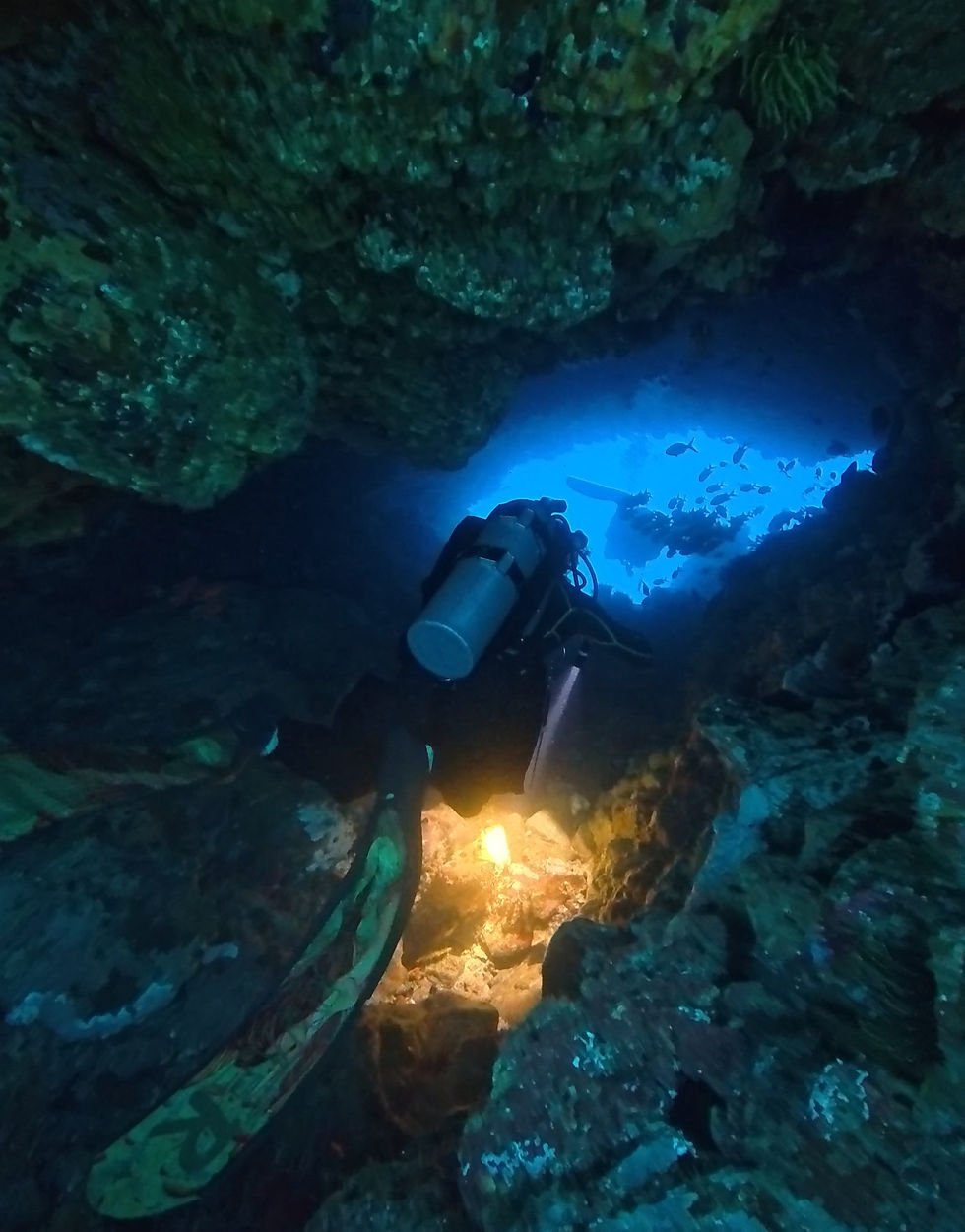
Not every dive is a "washing machine" ride! Many days offer a gentle, effortless "drift" where you can just hang in the blue and enjoy the scenery.
But for those days when the tide has a bit more "kick," your skills need to stay sharp. Navigating a current with ease comes down to the basics done perfectly:
Precision Timing: Descending at the exact right moment.
Effortless Technique: Using efficient fin kicks to conserve energy.
Strategic Positioning: Tucking into the reef’s profile to stay out of the main flow.
Active Awareness: Staying locked in on your guide and the pre-dive plan.
These habits should be part of every dive, but they are your best friends when things get spicy. Master the basics, and you’ll find that even the strongest currents feel less like a struggle and more like a dance.
Why Experienced Divers Love It
Currents mean:
Schooling fish formations
Sharks using flow to cruise effortlessly
Active cleaning stations
Abundance of life
Without current, many of these encounters wouldn’t happen.
Flat water often equals quiet reef, moving water equals action.
Are Currents Dangerous?
They can be — if you’re unprepared, dive without proper planning or training or when making poor decisions underwater.
That’s why dive planning in Candidasa is tide-based and condition-based.
Tide tables
Wind direction
Recent conditions
Diver experience level
Sometimes we choose the protected side of Gili Tepekong. Sometimes we adjust depth plans.Sometimes we say no to a site.
Honest diving means adapting.

Building Confidence in Currents
If you’re newer to current diving, East Bali can actually be a great place to learn — with guidance.
You develop:
Better buoyancy control
Improved situational awareness
Smarter air management
Stronger finning technique
These are skills that improve every future dive you do worldwide.
The Payoff
When conditions line up just right, current meets structure.
Fish stack in formation.
Predators patrol the edges.
And suddenly you understand why Candidasa Bali diving has the reputation it does.
Currents aren’t something to fear but to be respected.
They’re the reason the reef feels alive.

Thinking About Diving East Bali?
If you’ve been curious but slightly hesitant because of the “current” reputation, the best thing you can do is talk to us honestly about your experience level, it is ok to not be ready yet and we can definitely help you get there.
East Bali isn’t about proving anything.
It’s about diving smart.
And when you dive smart here, the ocean rewards you.
In summary, understanding Candidasa's currents is key to unlocking its potential for incredible diving and memorable experiences. As you explore these underwater wonders, remember to prioritize safety and responsible diving practices. Ready to ride the tide? Join Salty Finns Diving Bali for a front-row seat to the most exhilarating dives in the East.


Comments